Most conversations about e-invoicing focus on the invoice. For a business owner or an accountant, the real question comes at the end of the month, when the VAT return is due.
The short answer: e-invoicing does not replace your VAT return. It changes how the figures behind it are produced. New to the topic? Start with what e-invoicing is and who must comply.
What stays the same
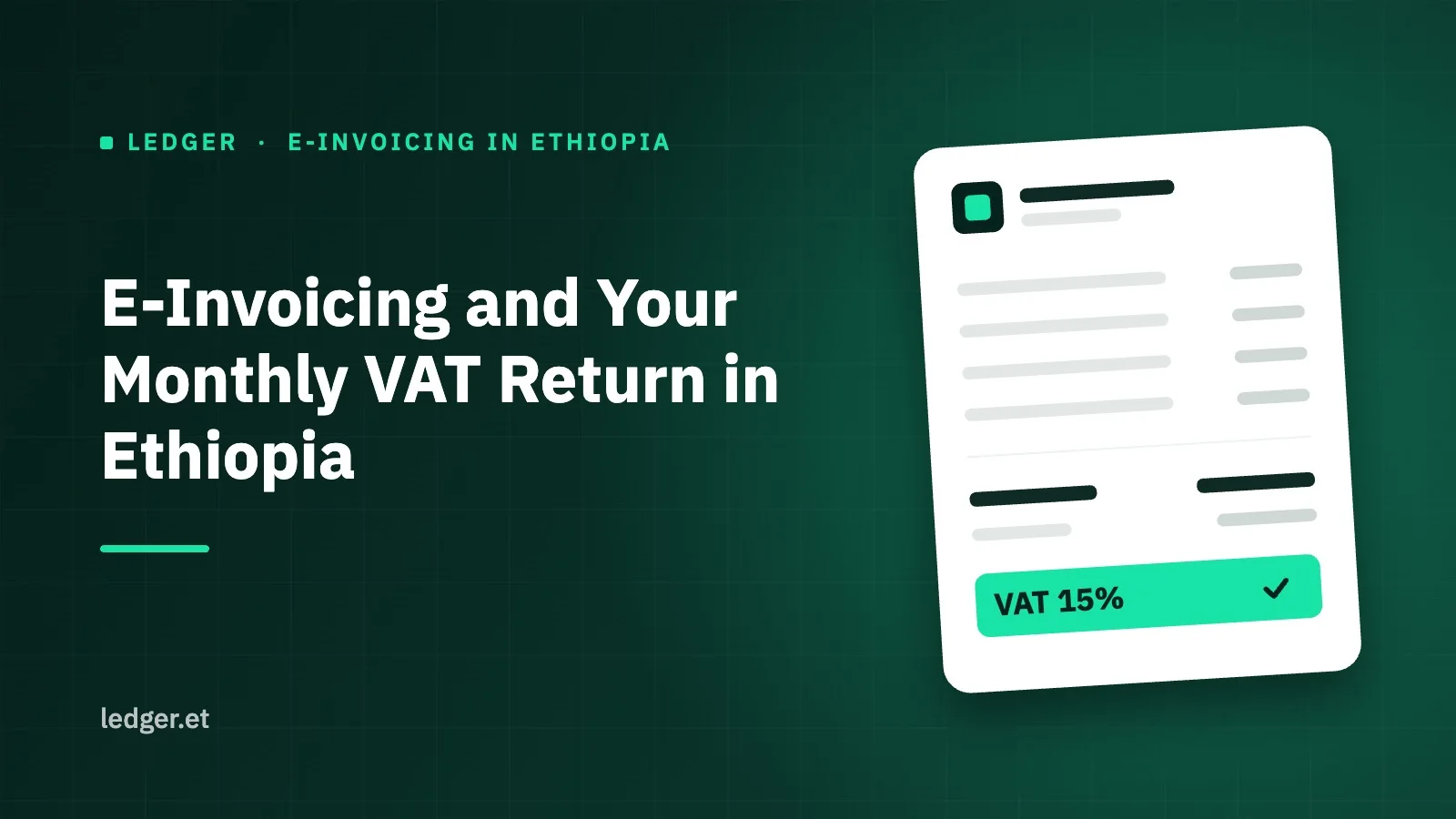
VAT is governed by VAT Proclamation No. 1341/2024. The standard rate is 15%. VAT-registered businesses file a return for each monthly accounting period by the last day of the following month, even when there is no VAT to pay. Input VAT on your purchases is claimed through that same monthly return.
E-invoicing does not change any of this. You, or your accountant, still prepare and file the return.
What changes
Under Directive No. 1142/2018 (1142/2026 in the Gregorian calendar), each sale is sent to the Ministry of Revenues' Electronic Invoice Registration System as it happens, and the invoice is valid only once it is registered. That has three practical effects:
Your sales figures are already organised. Instead of collecting receipt books at month-end, the data exists from the moment of sale.
The Ministry sees the same sales you do. The Ministry intends to use e-invoicing to improve its monitoring of VAT returns and payments, so it makes sense to reconcile before you file.
Corrections follow a procedure. Price adjustments go through tax credit notes and debit notes, and each correction has to be reflected in the right VAT return.
A simple month-end routine
Export the month's registered sales from your e-invoicing system.
Check credit notes, debit notes and any cancellations against them.
Match your purchase invoices, the basis for your input VAT.
Reconcile the totals with your books before the return is prepared.
File by the last day of the following month.
Why it helps you
Less retyping means fewer errors, and fewer errors mean fewer questions from the tax office. Your accountant spends time checking and advising instead of copying numbers. If you are an accountant, read our guide on how to prepare your clients.
See it working
Ledger Technology PLC is listed by the Ministry of Revenues as an approved provider of sales registration SaaS under Directive No. 1142/2018 E.C. Book a free demo and ask us anything about how e-invoicing works in practice.
Book on Telegram: t.me/ledgersalesbot
This article is general information, not tax advice. For your specific situation, speak to your accountant or the Ministry of Revenues.